
1. Get a paper copy
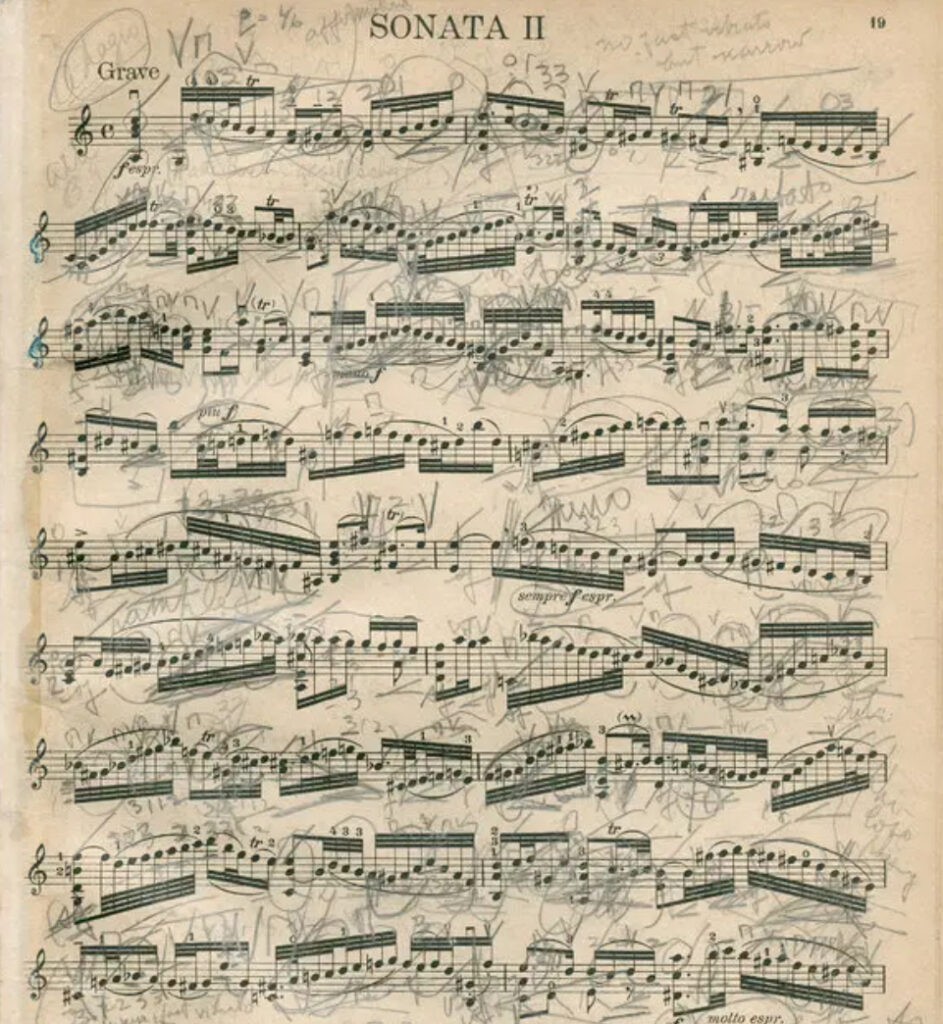
There is quite a lot involved in singing, and you need to be able to mark all kinds of reminders: breaths, dynamics, fermatas, etc. You need a copy that you can carry with you and mark up. (If you need to scan a copy out of a book, Turbo Scan is the best and most economical scanner app out there).
If you can read music, your first step should be to clap out the rhythm and then plunk it out on the piano. If you can’t read music yet, there’s no time like the present!
2. Write it down
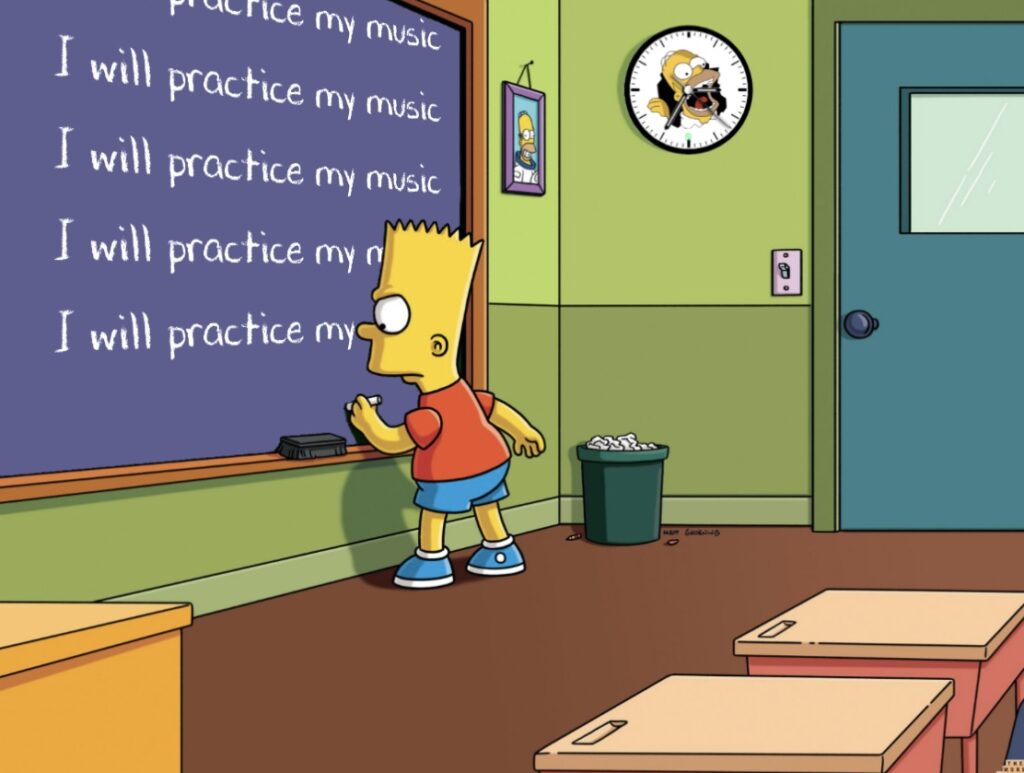
Physically writing something down will help you commit it to memory faster than anything else. It may make you feel like you’re in detention, but if you take the time to write out the lyrics five or six (or fifteen or sixteen) times, they will be so much more likely to stick! It will also help you to notice patterns in the song.
Start by copying it directly from your sheet music. Then when you’re feeling confident, try it from memory and then check your work. This will help you find the trouble spots so you can fix them.
3. Start at the end
Instead of always working from the beginning to the end, it can be helpful to work in sections starting at the end. This helps in a couple ways: it breaks down the song into manageable pieces for learning; and as you perform it, the end of the song will feel just as familiar as the beginning.
Here is how this technique works: if a song has four sections, start rehearsing section D. Then run through sections C and D; then B, C, and D, and then A, B, C, and D
4. Memorize the first lines
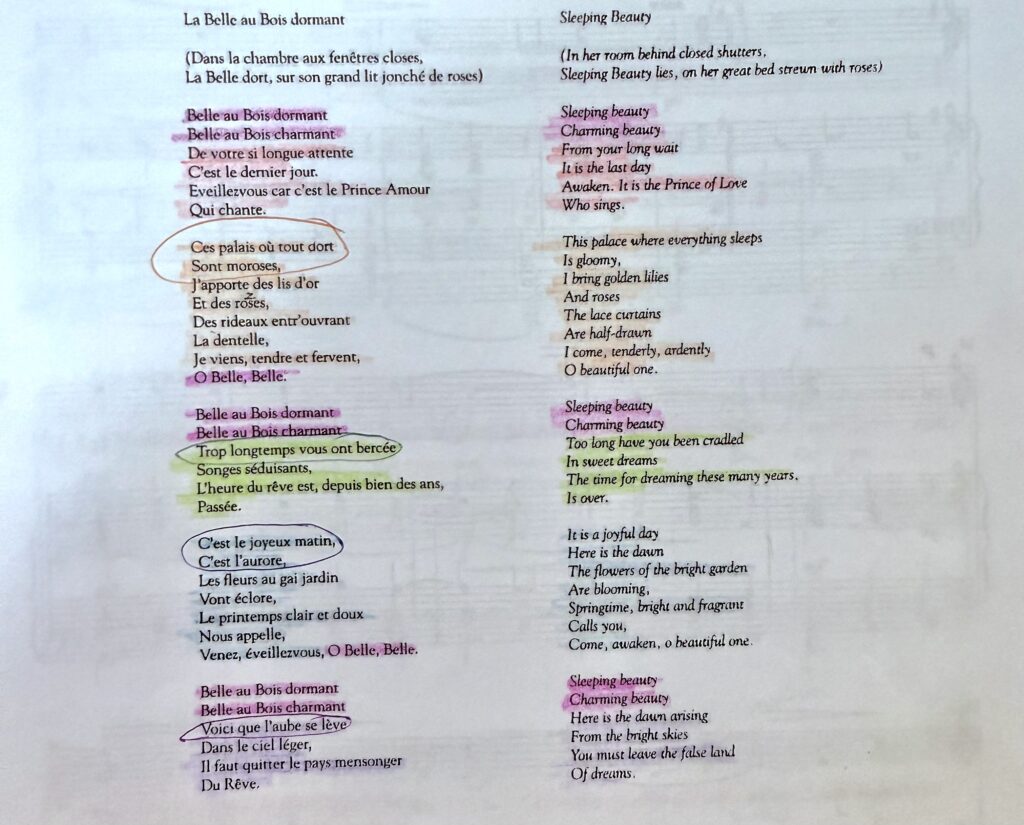
I tend to memorize individual lines and sections fairly well, but when it comes to remembering which verse or section comes next, I get lost quickly! The first method I use to overcome this is to pull out the first lines of each verse or section and memorize them in order. Similar to breaking the song down into pieces, this makes the task feel less overwhelming.
5. Color code
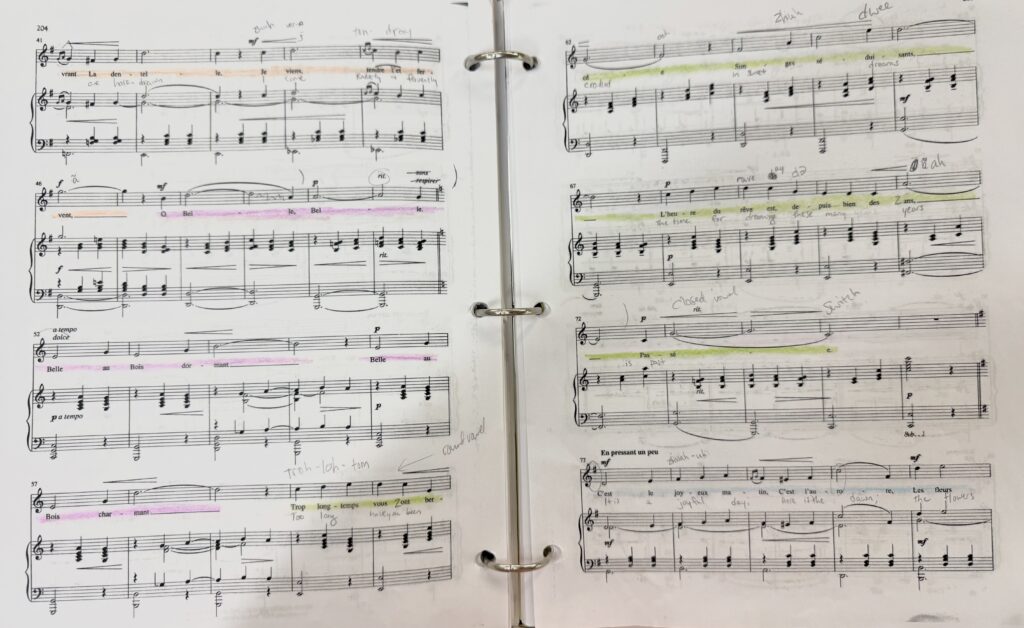
Color coding is my favorite method for learning the overall flow of a song. Here’s my process: Depending on the song, I will use different colors for each verse or section. Any repetitions (e.g. a chorus) get the same color, and if the lyrics are repeated but the vocal line changes, then I show that with a combination of highlighting and underlining. Rainbow order is helpful sometimes; other times I choose colors that just feel right for the passage (e.g., blue for a sad bridge or yellow for a verse about sunshine). During a performance, visualizing the colors keeps me on track.
6. Listen to recordings, but cautiously

Listening to other singers is risky and should be done sparingly. It can be very helpful for getting a sense of the piece and the traditional way it is performed, but it may also cause you to instinctively copy someone else’s voice and interpretation. If you must use vocal recordings, try to listen to a few different artists’ versions so you get a variety of input.
A better alternative is to listen to instrumental recordings or MIDI files. These can be found on Appcompanist, YouTube, etc. When you listen to recordings, do it with the sheet music in front of you and lip sync as you learn the melody. You will be shocked at how quickly you absorb it with this method.
Again, if you can read music, your first step should be to sit down with the sheet music to work out the rhythm and melody on the piano (or better yet, sight sing it).
7. Record yourself
This is one that I find especially helpful for foreign-language arias and art songs, but it can be applied to any piece. Once you have figured out the rhythm (and the diction), record yourself speaking it in rhythm. If it is a quick song, you can make a slow version and then a version a tempo. Whenever you are in the car, doing the dishes, etc., listen and try to speak along with it. This was a method I used to learn “La fée aux chansons,” which was a daunting challenge for someone who doesn’t speak French!
8. Write a translation
When learning a song in a foreign language, it’s critical to copy out a translation (like step 2, but in English). Better yet, copy out two translations: one poetic and one in literal, plain language. Writing your own plain language translation can also help you connect to the text of an English song.
9. Find the meaning

Ultimately, the purpose of performing is to connect to the audience. Figuring out how to do this is the final—but critical—step of learning a song. What story are you telling? How should your audience feel? What is your character feeling? What is the message, and how can you get it across to the audience? How can you make the piece your own? You will find the answer to all of these questions—or at least a starting point—by connecting to the text. (Further research may be required, especially if the piece is part of a larger work such as a musical or opera).